At the World Economic Forum in Davos, Switzerland, President Trump inaugurated a $1 billion initiative aimed at transforming Gaza. The plan was presented by Jared Kushner, who shared a master plan during the event. Trump emphasized Gaza’s potential for development, aligning this initiative with Phase Two of a 20-point Extensive Plan to End the Gaza Conflict. The plan is backed by UN Security Council Resolution 2803, set for 2025.
President Trump launched a $1 billion initiative at Davos to transform Gaza, emphasizing its development potential in a master plan by Jared Kushner.
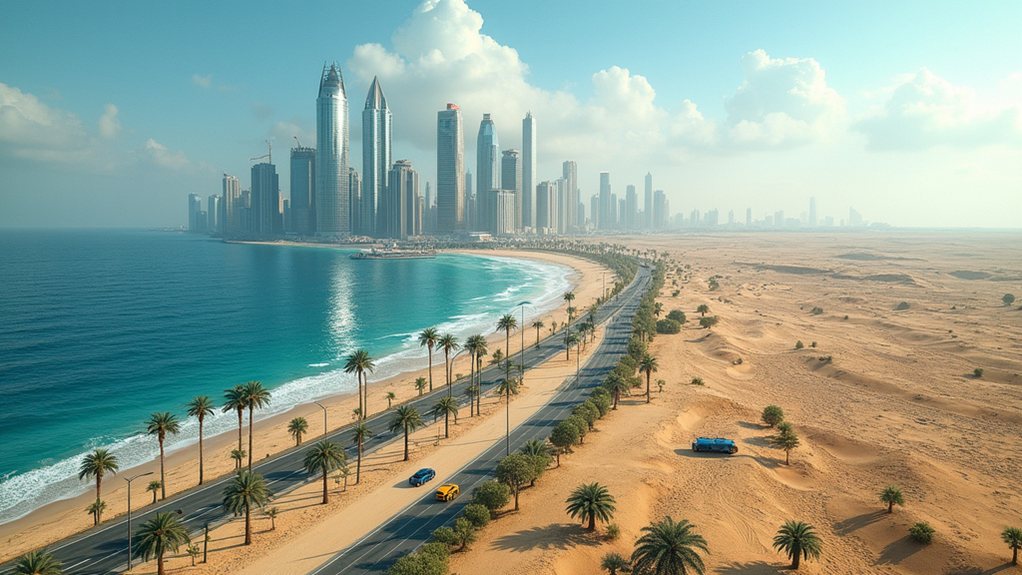
This initiative requires at least $25 billion for the full redevelopment of Gaza. It focuses on building upscale seaside resorts, skyscrapers, and new cities. The territory will be divided into zones for different phases of development, aiming to attract investment and mobilize capital. The objective is to create long-term prosperity and a self-sustaining governance structure, which aligns with the establishment of the National Committee for the Administration of Gaza (NCAG).
The vision is to turn Gaza into a futuristic seaside resort for its residents, starting with the rebuilding of southern Rafah city, which was heavily damaged in past attacks. Trump highlighted the area’s prime seaside location for real estate opportunities. He spoke of a “catastrophic success” in transforming initial ideas of free zones and Hamas zones into a cohesive plan.
Infrastructure improvements include roads connecting to Israeli bases and settlements. The leadership of this initiative will be chaired by President Trump himself, with a founding executive board that includes notable figures like Marco Rubio, Steve Witkoff, and Jared Kushner. Other members include Sir Tony Blair and Ajay Banga, among others.
A Gaza Executive Board will oversee governance and services, aiming for peace, stability, and prosperity. Security elements are essential to this plan. Major General Jasper Jeffers will command an International Stabilization Force to guarantee a demilitarized and terror-free environment. The Board of Peace’s governance structure notably lacks any mention of Palestinian self-determination. However, critics have raised concerns about the plan erasing Palestinian identities and risking forced displacement, amidst ongoing food and shelter shortages.