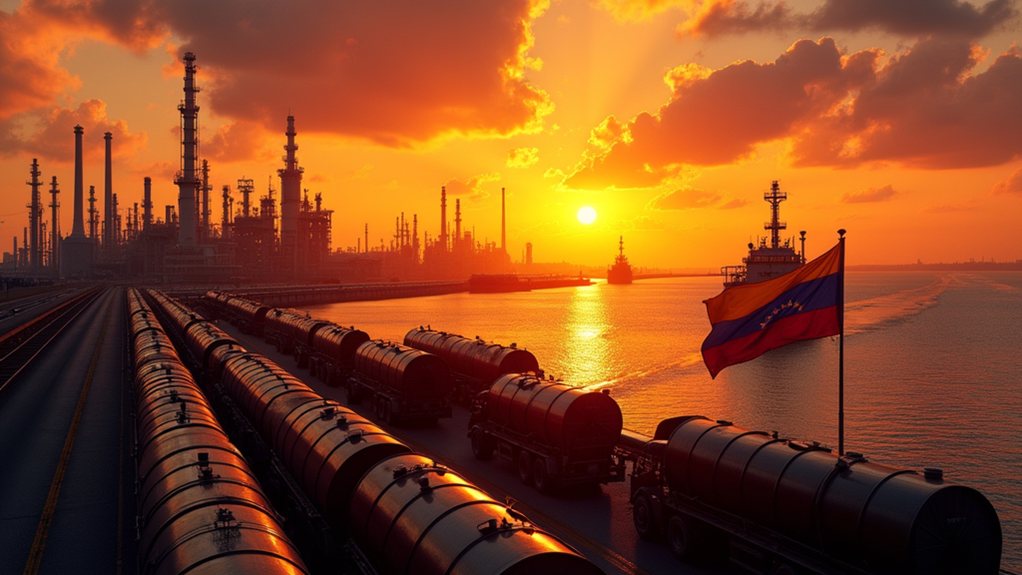
After claiming that Venezuelan crude oil is now flowing to U.S. refineries, former President Donald Trump positioned this move as advantageous for American refinery operations. He noted that the heavy crude from Venezuela is particularly suited for specific refiners on the U.S. Gulf Coast. Trump’s announcement followed recent U.S. military actions in Venezuela, suggesting a direct connection between these events and the flow of oil.
The first sale of Venezuelan oil to the U.S. after the military actions was valued at $250 million. The buyer, Vitol, has faced criticism because the company donated millions to Trump’s 2024 campaign. Vitol’s U.S. arm is based in Houston, raising questions about favoritism toward campaign donors. The proceeds from this sale were directed to a Qatar account, prompting further scrutiny. The sale was the first US sale of Venezuelan oil to occur since the Trump administration’s actions.
Citgo, owned by Venezuela’s PDVSA, operates refineries in Illinois, Louisiana, and Texas that are well-equipped to process heavy Venezuelan crude. There has been talk of a potential acquisition by an Elliott affiliate, which would position them to handle millions of barrels from Venezuela. Heavy crude is challenging for refineries that aren’t specialized, making Citgo a vital player in this scenario. Venezuela’s oil industry has faced significant challenges, including reports of theft and mismanagement that have contributed to production declines.
U.S. refiners in PADD 3 are expected to absorb an additional 300,000-400,000 barrels per day of Venezuelan crude. This influx is likely to increase coking utilization to levels seen in 2024. Valero is set to be the largest importer in 2024, bringing in 100,000 barrels daily. However, some refiners like PBF have reduced imports considerably compared to previous years.
Critics, including Senator Murphy and Senator Booker, have raised concerns about this arrangement. They argue that oil is being taken under duress and directed to a campaign donor, creating an unaccountable slush fund in Qatar. They claim this situation does not benefit the American public and instead favors big oil donors.