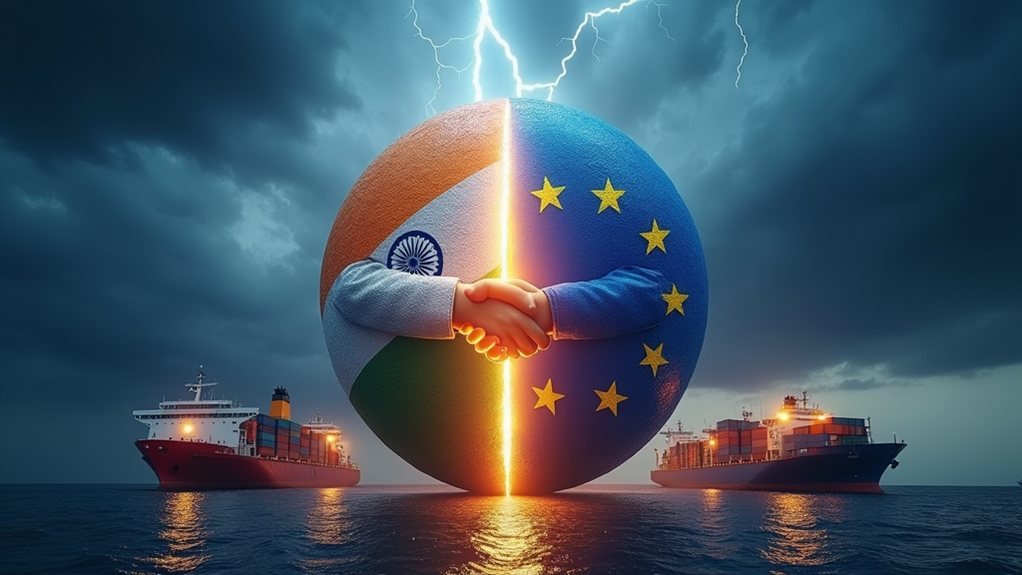

On January 27, 2026, India and the European Union reached a notable milestone by concluding negotiations for a landmark Free Trade Agreement. This deal, often called the “mother of all deals,” is expected to have a big impact on global trade. It represents about 25% of the world’s GDP and a third of global trade. Prime Minister Modi described it as a “blueprint for shared prosperity.” The formal signing of this agreement is expected in six months after legal reviews are completed.
Under this agreement, the EU will eliminate tariffs on 97% of its exports to India. This change will save European businesses around 4 billion euros each year. In return, India will reduce or eliminate tariffs on 96.6% of EU exports. The EU also plans to reduce tariffs on nearly 99% of Indian shipments by value. The implementation of these changes will occur in phases, especially for high-duty items like automobiles and wines.
The EU will eliminate tariffs on 97% of its exports to India, saving businesses 4 billion euros annually.
Indian exporters stand to gain considerably from this pact. Goods like textiles, apparel, engineering products, and leather will see reduced tariffs. Most tariffs on textiles and apparel will be removed right from the start. Meanwhile, EU exports will benefit from tariff reductions on wine, automobiles, and pharmaceuticals. Some chemical tariffs, which can be as high as 22%, will also be mostly eliminated. Additionally, the overall trade liberalisation coverage will ensure a more seamless trading environment between the two economies.
The agreement includes special provisions for agri-food items. Tariffs on olive oil will be eliminated, while other food products like juices and processed foods will see staged reductions. However, sensitive sectors, such as beef and rice, have been protected to avoid backlash from farmers.
In addition to trade, the agreement emphasizes cooperation on climate change, renewable energy, and security matters. This new partnership marks a bold step for both India and the EU amid rising global trade tensions.