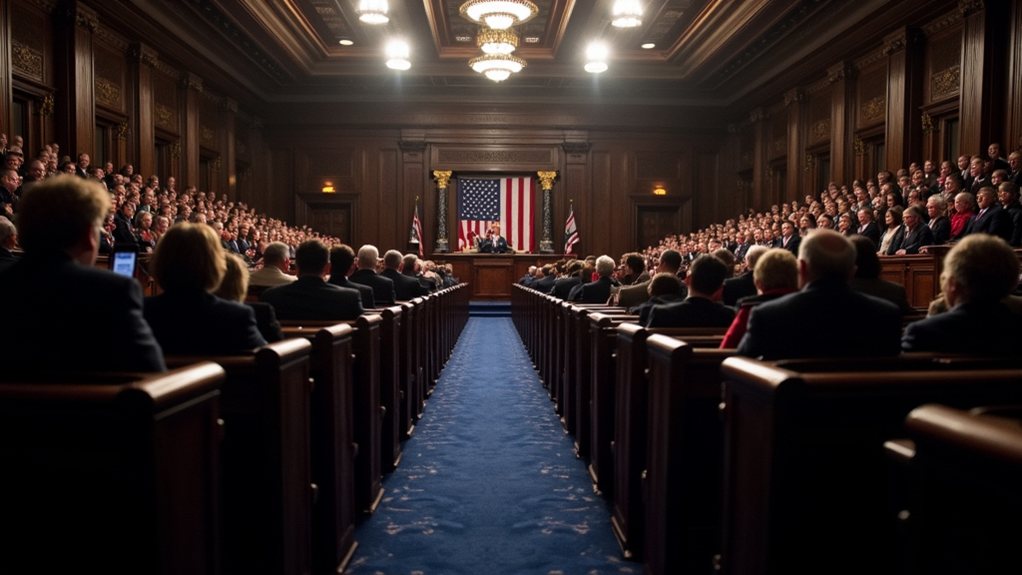

Furious over the Senate’s move to dismiss a war powers resolution regarding Venezuela, former President Donald Trump launched a public attack on several Republican senators. He targeted Senators Rand Paul, Lisa Murkowski, and Susan Collins for their support of the legislation. Trump called Paul a “stone cold loser” and labeled Murkowski and Collins as “disasters.” This came after the Senate Republicans voted to dismiss the resolution, which aimed to limit Trump’s military actions in Venezuela. The War Powers Act was designed to require the President to secure Congressional approval for military engagements exceeding a certain duration, reflecting ongoing debates about executive and legislative powers.
Former President Trump fiercely criticized Republican senators for their support of a war powers resolution limiting his actions in Venezuela.
The resolution faced strong opposition from Trump, who pressured five Republican senators who initially supported it. Under his influence, Senators Josh Hawley and Todd Young changed their positions. Vice President JD Vance even cast the tie-breaking vote in a 50-50 deadlock, ensuring the resolution’s dismissal. Trump’s actions come at a time when Republicans hold a 53-47 majority in the Senate, complicating their ability to maintain party unity. As Trump emphasized the need to protect his agenda during his midterm campaign, his frustration with GOP senators became even more pronounced.
Trump’s comments at a rally in Michigan highlighted his frustration. He said, “Here we have one of the most successful attacks ever and they find a way to be against it. It’s pretty amazing. And it’s a shame.”
Trump’s pressure tactics included direct phone calls to senators who backed the resolution. These calls were described as terse, with Hawley reporting that Trump said the legislation “really ties my hands.” Following Trump’s calls, Secretary of State Marco Rubio made follow-up calls to wavering senators, assuring them that no ground troops would be deployed.
Senate Republican Leadership faced challenges in managing the conflict between Trump and party members. Senate Majority Leader John Thune questioned the need for the resolution, pointing out that there were no U.S. troops in Venezuela at the time. This response aimed to balance the interests of senators while maintaining good relations with Trump.
Democrats, led by Senator Tim Kaine, criticized Republicans for avoiding a public debate on military actions. They argued that if Trump’s cause was just, he wouldn’t shy away from discussing it. Overall, the situation revealed deep divisions within the Republican Party over military policy and Trump’s aggressive approach.