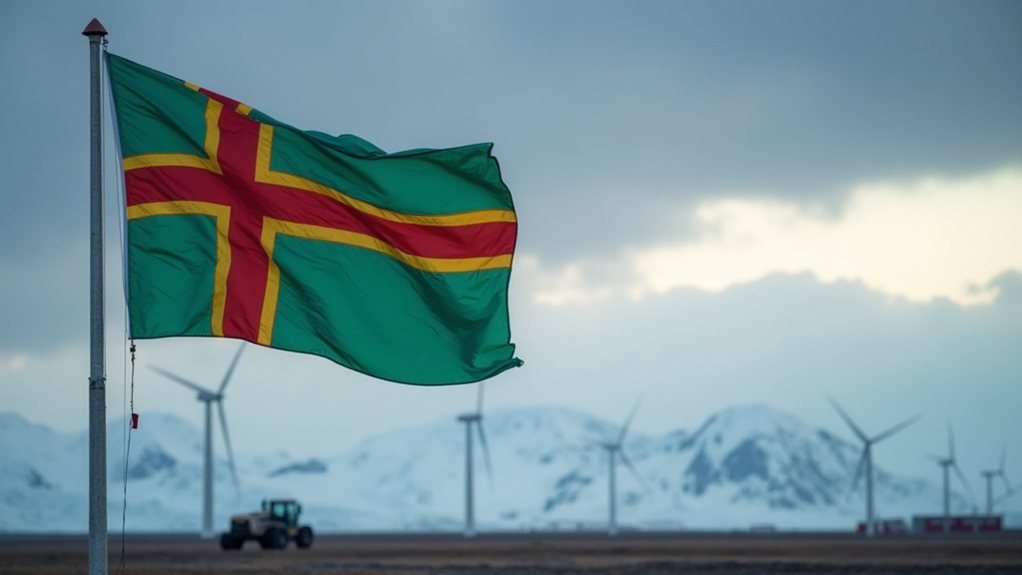

In a surprising turn of events, the opposition party Naleraq has claimed a majority in Greenland's recent election. This victory comes as the ruling coalition of Inuit Ataqatigiit and Siumut lost power. Voter turnout reached a record high of 78%, showing strong interest in the political process. Six parties contested for 31 parliamentary seats. The results took weeks to certify due to remote ballot collection.
Opposition party Naleraq secures majority in Greenland election; record voter turnout reflects strong political engagement.
The election was heavily influenced by the debate over independence. About 85% of Greenland's population is against joining the United States. However, a similar majority supports independence from Denmark. All major parties in Greenland advocate for eventual independence, but they disagree on when to hold a referendum. Economic factors, such as the viability of a self-sufficient Greenland, are hot topics among voters. Independence emerged as a top concern for voters, influenced by US interest in the region. Five out of six political parties in Greenland are pro-independence, reflecting a strong national sentiment.
Former President Donald Trump's interest in acquiring Greenland dominated the campaign. His promises of investment and job creation from the U.S. sparked excitement, but his threats of military action against Denmark alarmed many. In the days leading up to the election, social media interference raised concerns. This unusual attention drew global media to the Greenland election.
Greenland's economy relies on a $522 million annual subsidy from Denmark. The fishing industry is currently the economic backbone, providing many jobs. There's potential for mineral and rare earth element exploitation, which could change the economy. However, discussions on balancing environmental protection and resource development remain ongoing.
The geopolitical implications are significant. Greenland holds strategic importance in the Arctic region, with the U.S. military presence at Thule Air Base. Countries like China and Russia are also showing interest in Greenland's resources, raising concerns among NATO allies about future alignments.
As the world watches, Denmark is closely monitoring the election results. The EU supports Greenland's democratic process, while the United States reaffirms its strategic interest in the region.