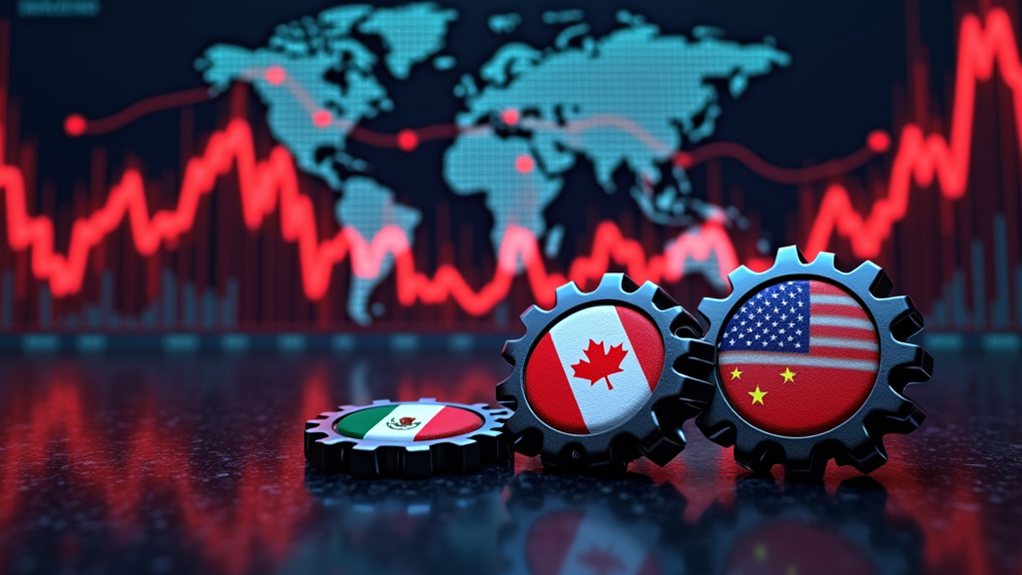

As tensions rise in international trade, the European Union (EU) faces a barrage of tariffs imposed by former President Donald Trump. On February 4, 2025, the US implemented a 25% tariff on imports from Mexico and Canada, with a 10% tariff specifically on Canadian energy. This move led EU trade ministers to gather in Warsaw to discuss potential US tariffs on European goods.
As international trade tensions deepen, the EU prepares for potential US tariffs targeting European goods.
Shortly after, on February 10, 2025, steel and aluminum tariffs were raised to 25%, escalating to 50% by June 3, 2025. Moreover, the US announced global tariffs with a baseline of 10% across all imports on April 2, 2025, further complicating trade dynamics.
In response, the EU proposed a reduction of automotive tariffs from 10% to 2.5% on February 7, 2025, hoping to ease the impact of US tariffs. Trump threatened to impose 50% tariffs on all EU imports starting June 1, 2025, which he later postponed to July 9, 2025.
The EU reacted by announcing counter-tariffs on €26 billion worth of US goods, including bourbon and motorcycles, set to begin on April 1, 2025.
The EU’s retaliation involved a phased plan starting April 15, 2025, and included various products like textiles and agricultural goods. However, the EU decided to suspend retaliatory tariffs on July 14, 2025, to extend the negotiation window. They also paused retaliatory steel and aluminum tariffs for 90 days on April 10, 2025.
On July 27, 2025, the US and EU reached a trade framework deal, establishing a 15% baseline tariff on most EU imports. This agreement also committed the EU to purchase $750 billion in US goods.
Despite some tariffs remaining high, such as the 50% on steel and aluminum, the deal aimed to stabilize trade relations. The EU’s ability to withstand Trump’s tariffs remains uncertain, especially with the average effective tariff rate in the US reaching approximately 18.6% as the highest since 1934. Ongoing negotiations and strategic exemptions may help, but the impact of these tariffs on the EU’s trade backbone is significant and complex.