
In a bold move, former President Donald Trump has reignited interest in Greenland, citing national security concerns as his main rationale. He warns that if the United States does not act quickly, countries like Russia and China may take control of the Arctic island. Trump links this situation to the Golden Dome project, which he claims requires Greenland for its success. He emphasizes economic security along with national security, renewing his 2019 pledge to seek ownership and control of the territory.
To push his agenda, Trump has threatened to impose a 10% tariff on Denmark, Norway, Sweden, France, the United Kingdom, the Netherlands, and Finland starting February 1. If no agreement is reached by June 1, the tariffs could increase to 25%. He has even refused to rule out the use of military force to achieve his goals. Through these actions, he aims to leverage economic pressure on Denmark for cooperation. He has warned European leaders, including Vice President Vance, about their security responsibilities regarding Greenland.
Historically, the U.S. has made several attempts to acquire Greenland, including a 1946 offer from President Truman to buy the island for $100 million. Denmark has consistently refused these offers, even during the Cold War when military presence was a concern. The U.S. maintains a military base in Greenland, which is important for missile warning and space surveillance. The U.S. Pituffik Space Base is also considered vital for missile defense, reinforcing Trump’s argument for the acquisition. Additionally, the strategic importance of Greenland has been recognized since the Norsemen/Vikings established colonies there centuries ago.
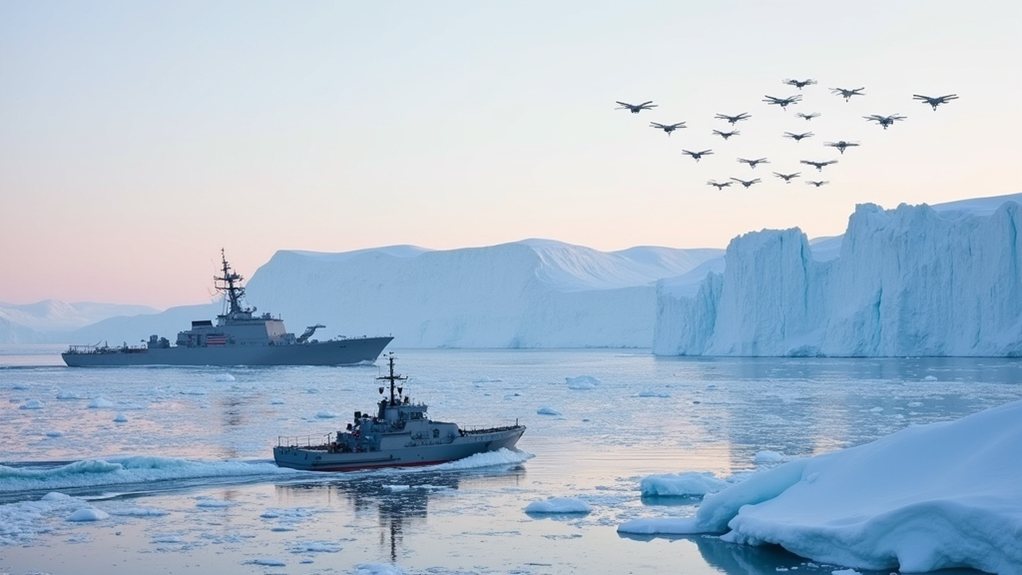
Despite Trump’s aggressive approach, Greenland has repeatedly stated that it is not for sale. Recently, Denmark announced a $6.5 billion Arctic defense package, increasing its military presence in the region.
As Trump’s plans unfold, the challenges remain significant. Any acquisition would require consent from the Danish government and the Greenlandic people. Additionally, Congress would need to ratify any treaty, further complicating Trump’s ambitions.