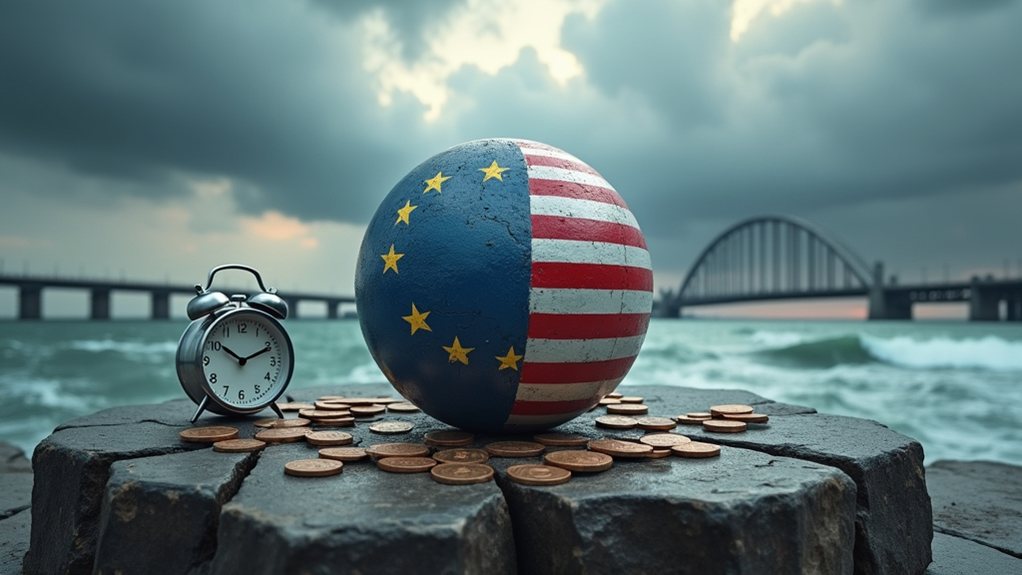

Since President Trump’s administration introduced punitive tariffs, US-Europe relations have faced significant challenges. Tariffs on EU imports have created friction between the two regions. The average US tariff on most European products is currently 10 percent. However, tariffs on steel and aluminum stand at a hefty 50 percent.
In July 2023, the US and EU reached a deal that set a 15 percent tariff on most EU imports, increasing from a previous 4.8 percent average. This change represents a significant rise in costs for European goods entering the US. The average US tariff rate on EU imports was 1.47% before the trade war; projected to rise to 15.2% with full tariff implementation. This agreement demonstrates how EU leaders’ reactions have varied, as some countries express relief at avoiding a trade war, while others criticize the deal for increasing reliance on the US.
The economic impacts of these tariffs are notable on both sides of the Atlantic. Without a deal, the EU risks a GDP contraction of 0.3 percent, and exports to the US could decline by up to 1.1 percent. Germany, being a large EU economy, may experience an average GDP contraction of 0.4 percent.
The EU could face a 0.3% GDP contraction and a 1.1% drop in US exports without a trade deal.
For the US, retaliation could lead to a GDP decline of 0.7 percent, with exports to the EU dropping drastically by up to 66 percent in a no-deal scenario.
Trade volumes between the US and EU were impressive, reaching €851 billion in 2023. With no free trade agreement in place, trade operates under the Most Favored Nation (MFN) WTO tariffs. The absence of a strong trade agreement means that both sides are feeling the pressure of increased tariffs.
Politically, reactions within Europe have varied. Countries like France and Spain favored a tough stance against the US, while Germany and Italy pushed for a deal. Eastern European nations expressed relief at avoiding disruptions that could affect aid to Ukraine.
The recent deal deepens the EU’s reliance on the US for trade, defense, and energy, raising concerns among some European political factions about the future of transatlantic relations. Critics argue that concessions made to the US reflect an unpredictable approach to trade and diplomacy.