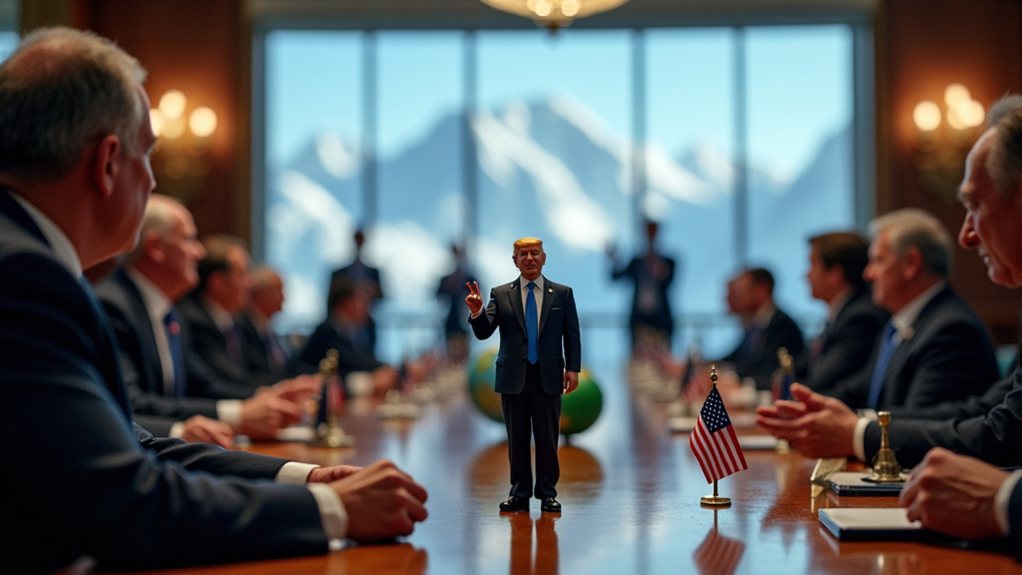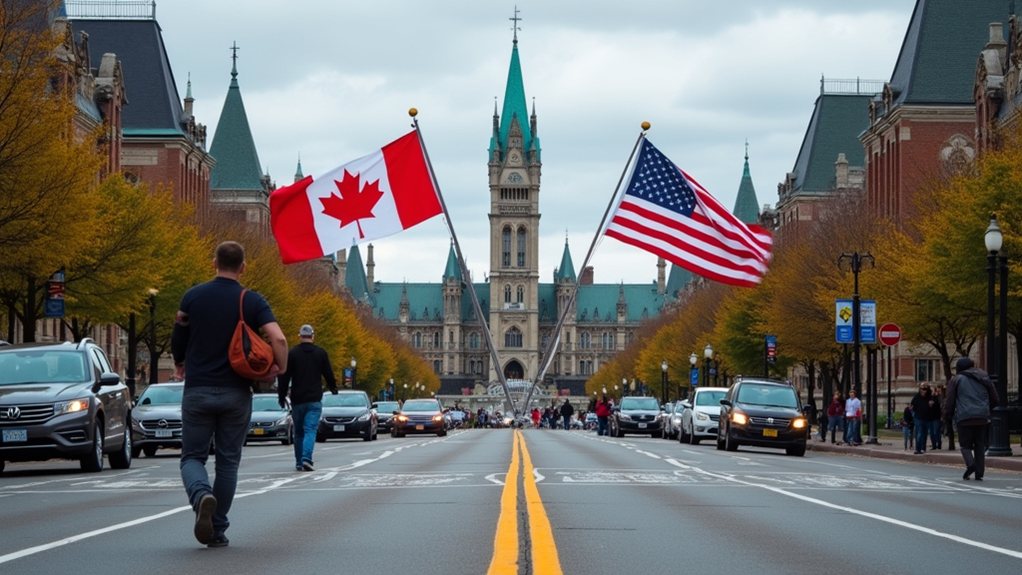
In a recent interview with Fox News, former President Donald Trump suggested that Canada should become the 51st state of the United States. He claimed Canada would be "much better off" as a state and pointed to a $200 billion trade deficit with Canada as part of his reasoning. Trump referred to Canadian Prime Minister Justin Trudeau as the "governor" of the "Great State of Canada" and suggested that the U.S.-Canada border is an "artificially drawn line." The Supremacy Clause underscores how federal laws take precedence in potential conflicts with state laws, a consideration if such a statehood scenario were ever pursued.
Trudeau quickly responded to Trump's comments. He warned that talk of annexation is a "real thing" and linked it to U.S. desires for Canada's critical minerals. Ontario Premier Doug Ford added a touch of humor, joking about buying Alaska in response to Trump's statements. Initially, some Canadian officials dismissed Trump's comments as jokes, but Trudeau emphasized the need for a strategic response to such U.S. threats.
Public opinion in Canada is overwhelmingly against joining the U.S. A recent poll showed that 90% of Canadians oppose the idea of statehood. However, younger Canadians seem more open to the concept. About 43% of Canadians aged 18-34 would consider joining if it meant guaranteed citizenship, and 31% of that age group believes a U.S.-Canada merger is inevitable. Curiously, Trump's comments have strengthened Canadian pride across all age groups.
On the economic front, Trump claimed that Canada receives a $200 billion annual subsidy, but the actual U.S.-Canada trade deficit was $72 billion in 2023. This deficit mainly comes from U.S. imports of Canadian energy. Trump also threatened 25% tariffs on Canadian imports, which could lead to retaliatory tariffs from Canada.
For Canada to become a U.S. state, Congress would need to approve it, requiring a majority in the House and 60 votes in the Senate. Additionally, Canada would likely need a referendum to proceed. Historically, annexing Canada has not been a major goal for U.S. foreign policy.