
As tensions rise between the United States and Mexico, the new Mexican President, Claudia Sheinbaum, faces a significant challenge. Recently, the Trump administration has ramped up military pressure on Mexico to tackle drug cartels. President Trump has openly discussed the possibility of U.S. ground operations against these cartels. His administration is pushing Mexico to allow American military forces to join in raids targeting fentanyl labs located within its borders.
Tensions escalate as Trump pressures Mexico for military action against drug cartels, challenging President Sheinbaum’s sovereignty.
In February 2025, the Trump administration designated six Mexican cartels as foreign terrorist organizations. This move sparked outrage in Mexico, where Sheinbaum condemned it as a threat to national sovereignty. She made it clear to Trump that any deployment of U.S. troops in Mexico was “not on the table.”
Mexico has legal barriers in place, as recent constitutional amendments restrict foreign troops on its soil. Sheinbaum asserted that the Americas “do not belong” to one nation, countering Trump’s claims of U.S. dominance in the region. Additionally, the Sinaloa Cartel and Jalisco New Generation Cartel are among the most powerful criminal organizations in Mexico, contributing to the urgency of U.S. concerns. Meanwhile, the Mexican government emphasizes that its trained military units are capable of addressing cartel violence.
The U.S. proposed a joint operations framework where Mexican troops would lead raids, while American forces would support them with intelligence and advice. However, Mexico countered with a proposal for increased information sharing, suggesting U.S. roles in Mexican military command centers instead of direct involvement in the field.
Currently, U.S. advisers are already stationed in Mexican military command posts, sharing intelligence for antidrug efforts.
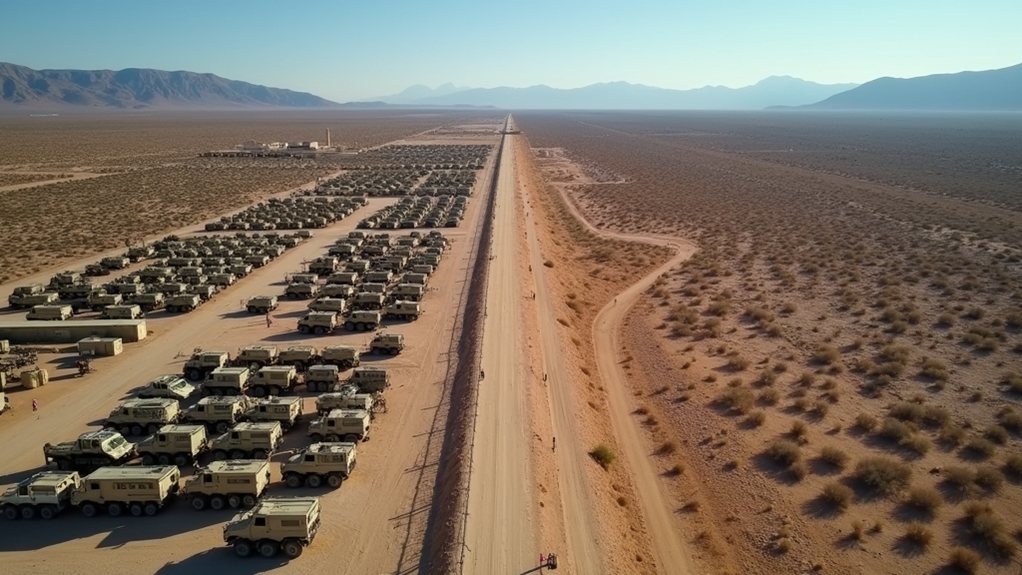
The scale of U.S. military presence is notable, with around 7,000 troops stationed at the U.S.-Mexico border. This operation has cost roughly $1.3 billion, with the Defense Department expecting to spend at least $5 billion more in 2026 for border operations. Funding also includes millions for detaining migrants at military bases.
Amid these developments, Sheinbaum’s government is focused on maintaining sovereignty while addressing the complex issues of drug trafficking and security.