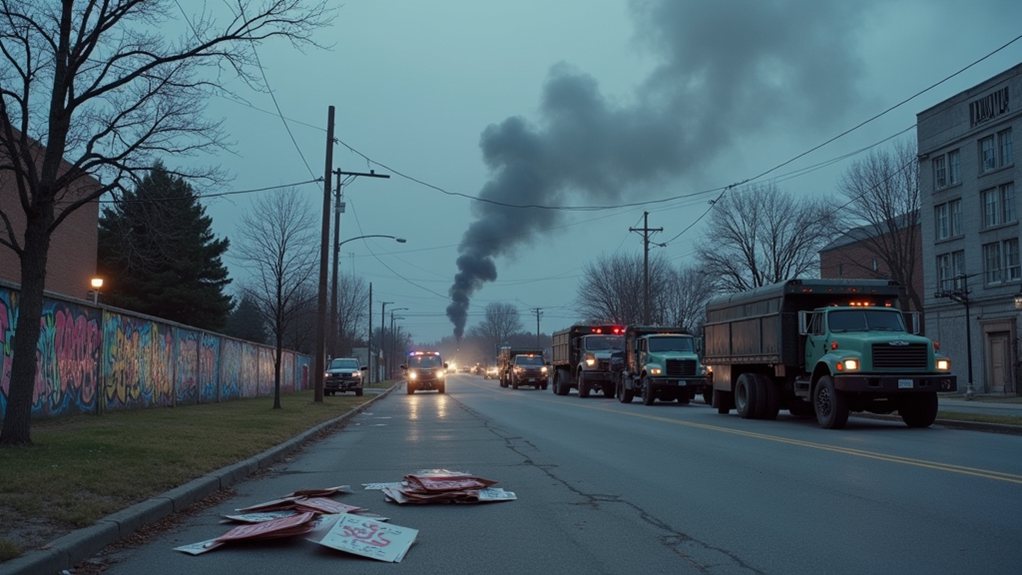
President Trump recently paused his threats to deploy active-duty soldiers to Minnesota amid ongoing immigration enforcement operations. On January 18, 2026, the Pentagon had ordered around 1,500 soldiers from the Army’s 11th Airborne Division to prepare for possible deployment. This division, based in Alaska, specializes in arctic operations and was put on standby due to Pentagon orders federal immigration enforcement efforts in Minnesota.
Trump had threatened to invoke the Insurrection Act, a law that allows the President to use active-duty troops for law enforcement. He claimed he would take this action if “the corrupt politicians of Minnesota don’t obey the law.” He accused opponents of immigration enforcement of being “professional agitators and insurrectionists.”
However, just a day later, he walked back his threats, stating there was no immediate need to invoke the act but emphasized he would use it if necessary. The War Powers Act underscores the importance of congressional oversight in military deployments, raising questions about executive authority in such domestic scenarios. National Guard deployments in various cities have faced legal challenges, raising concerns about the use of military force in domestic situations.
Just one day later, Trump retracted his threats, asserting no immediate need for the Insurrection Act while keeping options open.
This situation is complicated by legal issues surrounding military deployments. A federal judge ruled in September 2025 that the administration had illegally deployed troops to Los Angeles, violating the Posse Comitatus Act, which restricts military involvement in domestic law enforcement.
Previous attempts to deploy the National Guard in various cities have faced multiple court challenges. The U.S. Supreme Court even rejected an emergency appeal from the administration regarding a National Guard deployment in Chicago.
Despite these legal challenges, immigration enforcement operations in Minnesota have expanded considerably. Protests against ICE personnel conducting these operations have emerged, leading to military readiness alerts.
The National Guard has mobilized troops in 19 states, with Texas deploying the largest number.
Minnesota’s Governor, Tim Walz, has appealed to Trump to lower tensions in the state. As protests continue, the political climate remains charged, and the uncertainty surrounding military involvement lingers.


