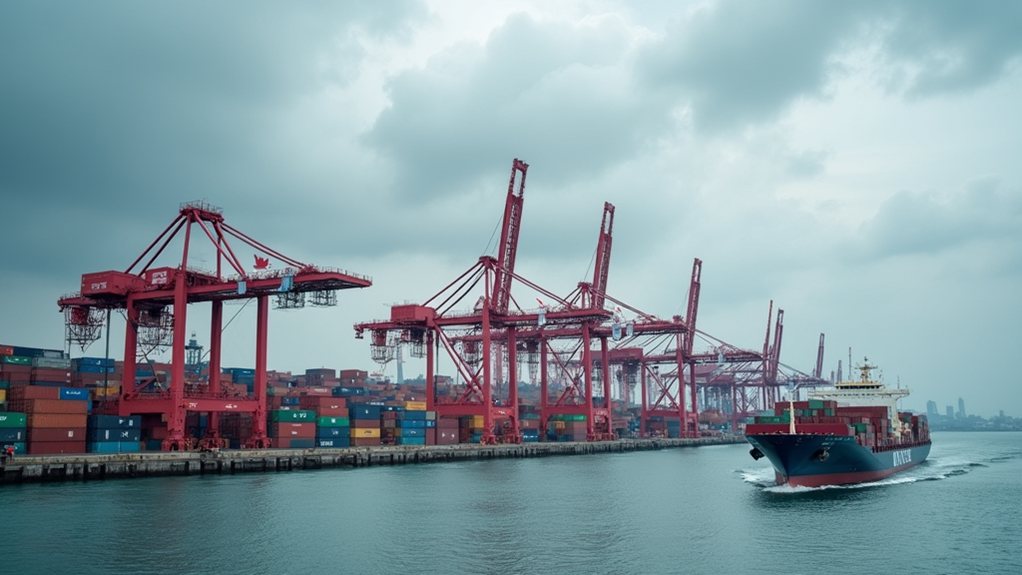

As China wrapped up 2025, it ended the year with a record trade surplus of nearly $1.2 trillion, despite the tariffs imposed by the United States. The country’s exports rose by 5.5% to reach $3.77 trillion, while imports remained flat at $2.58 trillion. December alone saw exports increase by 6.6% compared to the previous year, with imports up 5.7%. This considerable surplus was driven by higher exports and muted imports, even with ongoing tariff pressures.
China’s exports to the U.S. fell about 20% in 2025 due to these tariffs. However, the country successfully shifted its focus to other markets, reducing its reliance on U.S. sales. While tariffs reduced U.S. export lanes, they did not hinder China’s overall export capacity. As a result, the gap between global sales and purchases widened, showcasing that momentum persisted despite trade barriers from the U.S.
China’s shift to alternative markets amid U.S. tariffs showcases resilience, widening the gap between global sales and purchases.
The average tariffs imposed by the U.S. on Chinese goods reached 47.5%, affecting nearly all products. These tariffs rose considerably throughout the year, peaking at 127.2% in May before some reductions were made. In response, China also raised tariffs on U.S. exports, reaching an average of 31.9%.
However, negotiations in Geneva led to a decrease in U.S. tariffs to about 51.8%, while China lowered its effective rate to 1.3% following a series of trade meetings.
The impacts of these tariffs were clear. China saw imports from the U.S. drop by 14.6% in 2025. U.S. tariffs were now 15 times higher than they were before 2018. This widening disparity in tariffs raised concerns for the future.
As the trade surplus grew, calls for further U.S. tariffs and investigations increased. There were worries about how global demand might cool or if trade barriers would tighten, forcing China to reconsider its growth strategies. The shifting landscape of global trade continued to rattle markets.